Bikepacking and Photography Across Fuerteventura
The route
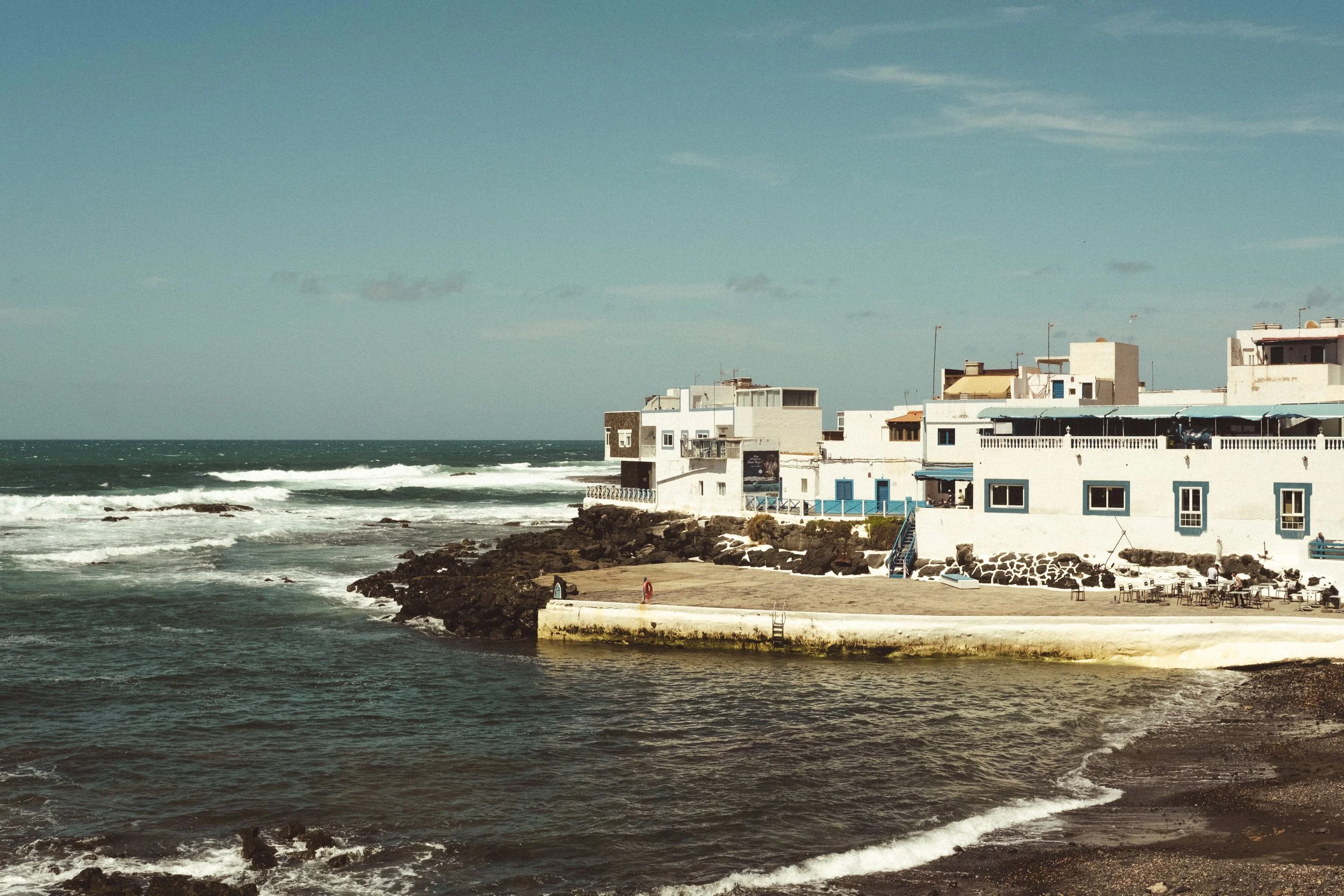
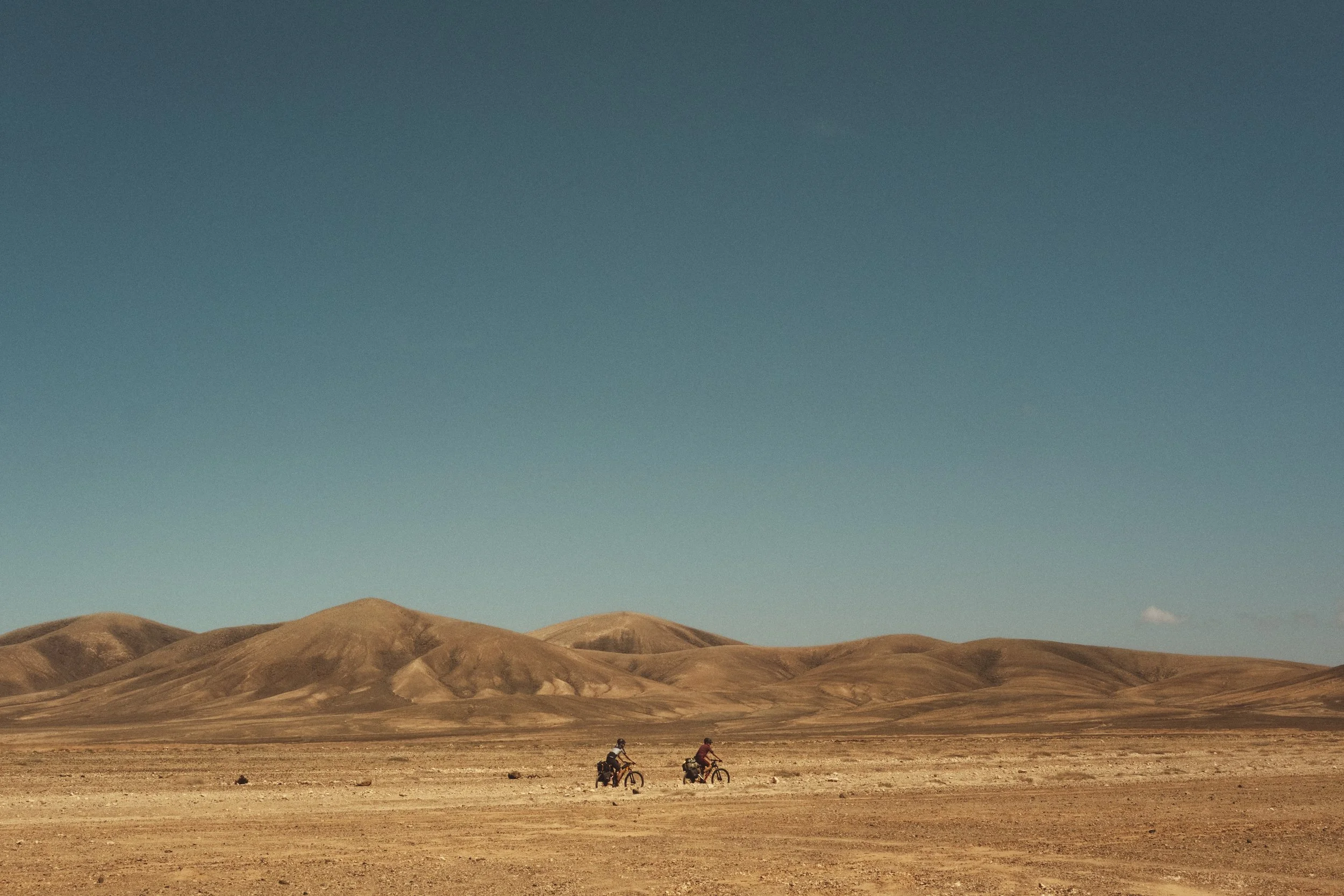
I rode across the island in March 2025, over the course of five days. The route crossed Fuerteventura from north to south, linking small towns, long gravel sections and open volcanic plains. Endless dirt roads, remote tracks and stretches where the horizon barely changed. A route that rewards patience and rhythm rather than speed.
I did the journey with my brother and my father. We started in Corralejo and finished there, riding almost always close to the coastline. In total, we covered around 300 kilometers.
Fuerteventura is an idyllic destination for bikepacking: desert-like landscapes, raw textures, and a constant sense of openness. The light is generous and steady, the temperature ideal for riding all day. And then there’s the sea. Always present. Imposing, deep blue, sometimes calm, sometimes wild. Riding with the ocean nearby has a way of slowing your thoughts while your legs keep moving — a refreshing reward for anyone pedaling under the sun and dust.
The wind
There’s one factor you cannot ignore here: the wind.
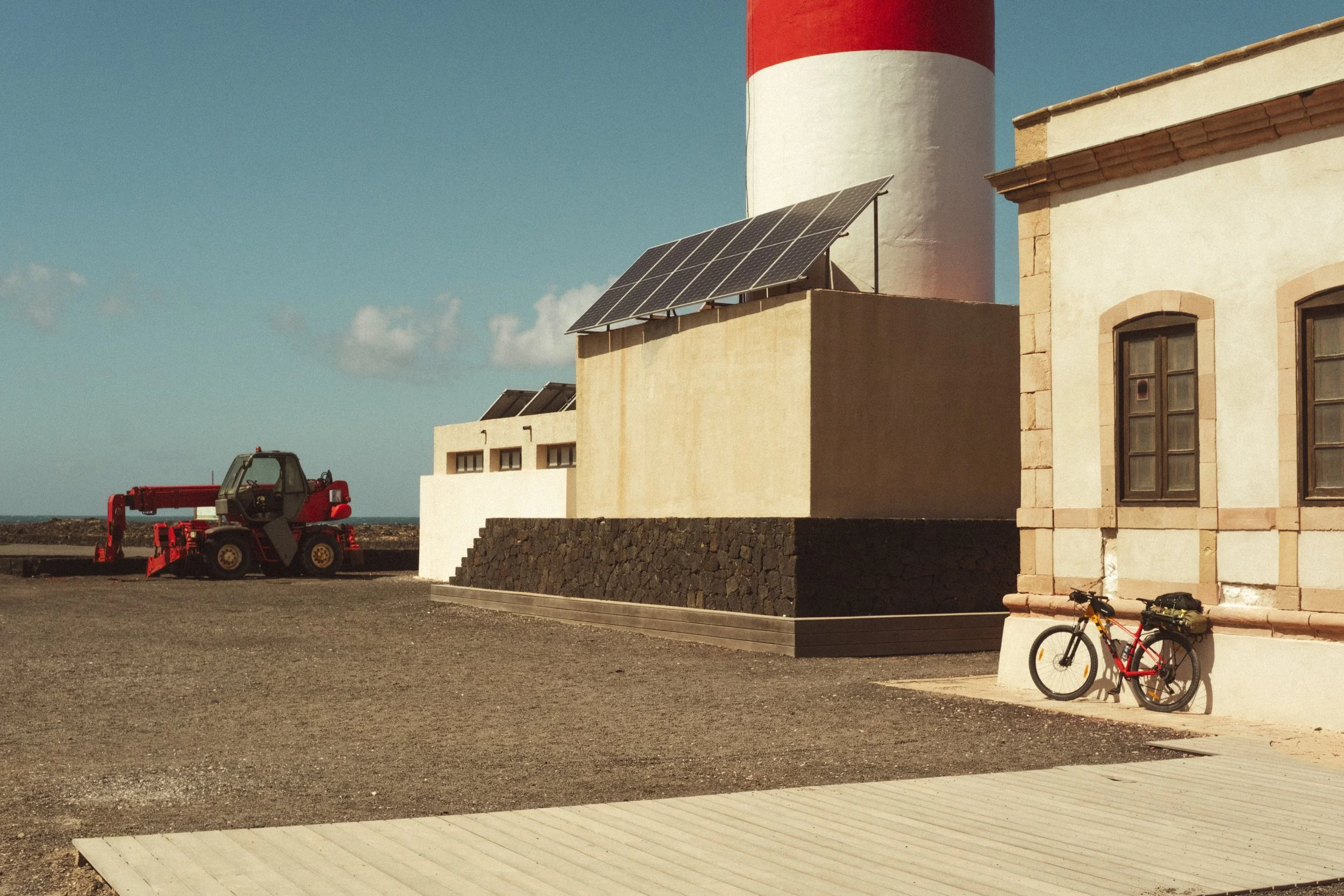
Fuerteventura doesn’t hide it — it announces it. It’s right there in its name. Headwinds can be absolutely brutal, especially on exposed tracks. There were moments where progress felt heavy and slow, legs working hard while the landscape barely shifted. It’s not romantic, but it’s honest. And it’s part of what gives the island its character. You understand very quickly why it’s called Fuerteventura.
The route itself is not particularly difficult — the wind is what makes it uncomfortable. In our case, we had it against us for around 85% of the trip.
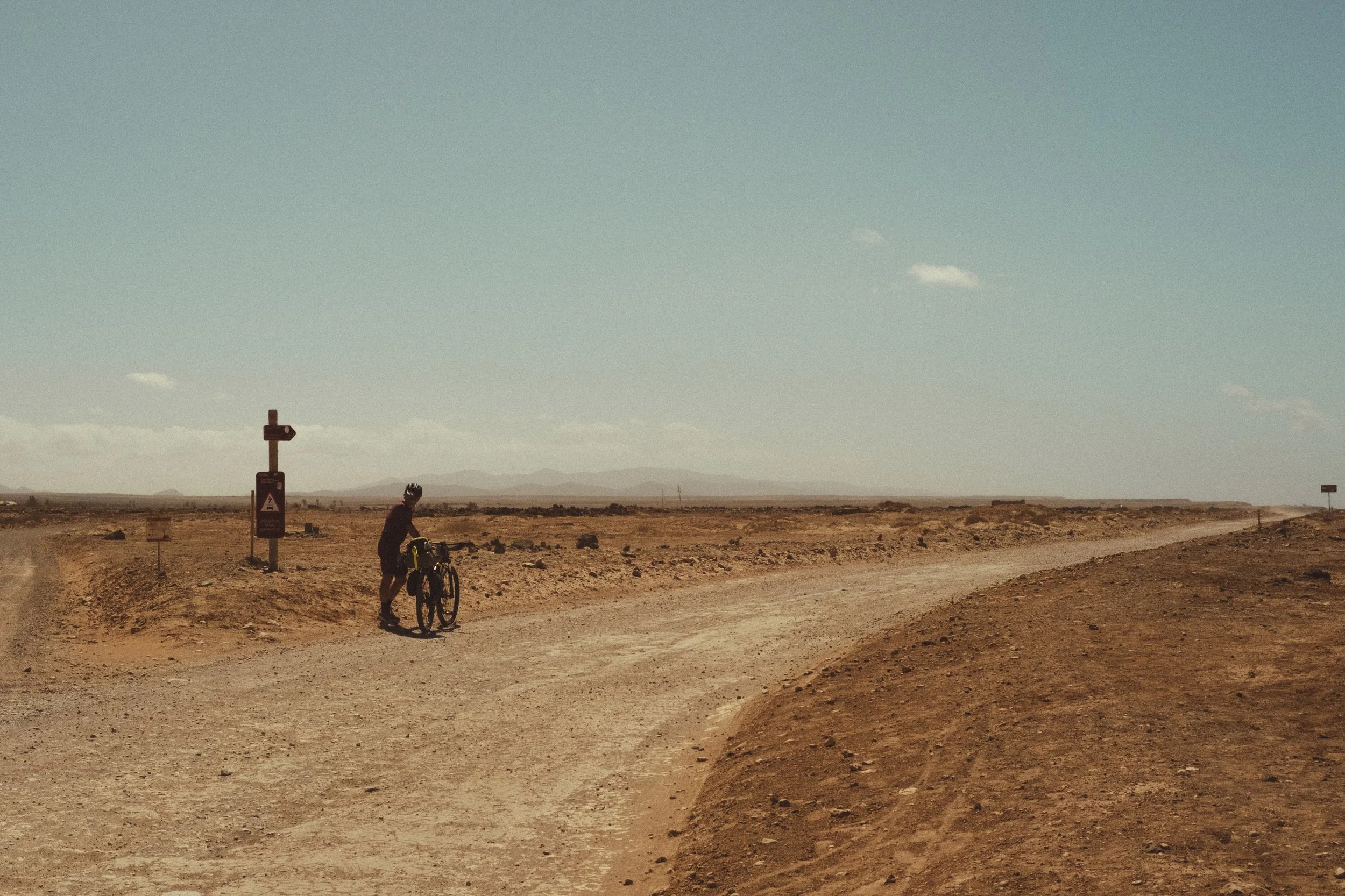
From a photographic point of view, the wind shapes everything: clouds, dust, movement in the frame. It adds tension and unpredictability, which I find incredibly inspiring.
Photography gear
When you move by bike, every decision matters. What you carry, what you leave behind, and especially what kind of camera you decide to bring with you. Bikepacking forces you to simplify — and photography becomes part of that balance between weight, access and intention.
For my bikepacking trip across Fuerteventura, I wanted a setup that wouldn’t slow me down, physically or mentally. As a professional photographer, this matters a lot to me. To be completely honest, I planned this trip thinking more about the photographs I wanted to make than about the route itself.
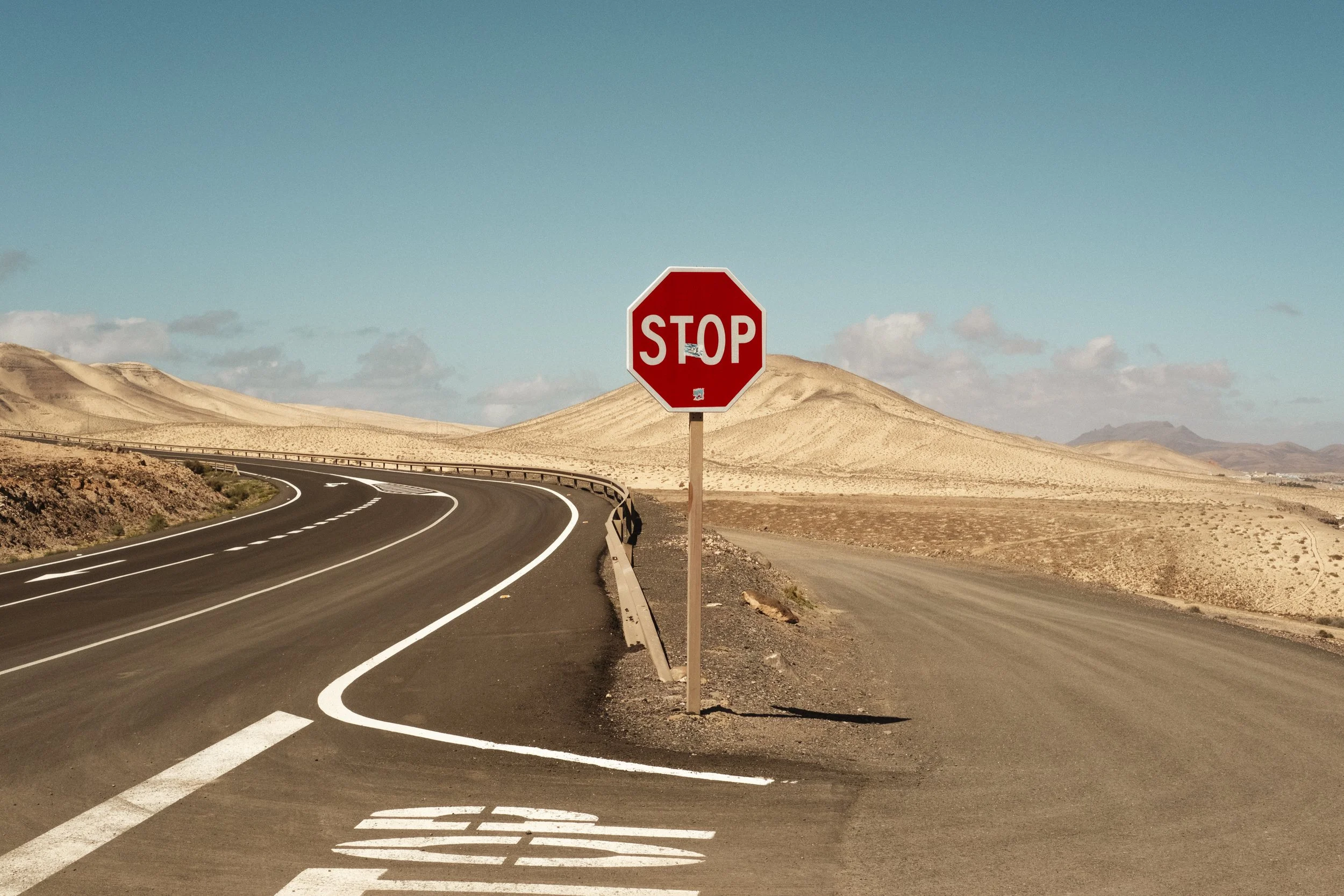
The camera also had to fit inside the top tube bag, always within reach while riding. Easy access was key. I chose the Fujifilm X-E4 with the 27mm lens. Compact, lightweight, discreet, and more than capable of delivering the kind of images I was looking for. One body, one lens, no extra weight. Just what I needed.
When you’re riding for hours, stopping constantly to shoot breaks the rhythm. Being able to grab the camera, shoot, and keep rolling became part of the flow of the trip. Manual focus played an important role here, allowing me to pre-focus and react quickly when shooting from the bike. Autofocus was there when needed, but the real value was in simplicity and trust.
The X-E4 and the 27mm allowed me to work fast. Wide enough to capture landscapes, close enough for details. A focal length that feels natural, almost invisible. That 27mm equals roughly a 40mm full-frame, which for me is the perfect focal length for landscapes, documentary work and portraits. Wide enough to capture open plains, yet natural enough to match the human eye and maintain a faithful representation of what I was experiencing.
More than photos
This journey also became a video project. I documented the ride, the landscapes and the rhythm of the island in motion. If you want to dive deeper into the trip, see more photographs and feel the pace of the route, you can watch the full video on my YouTube channel, where I share the complete story of this bikepacking adventure across Fuerteventura.
One mistake I made was bringing my Sony A7S II to film myself during the trip. I wanted to document how I rode and photographed the landscape for my photography YouTube channel. I brought the oldest Sony I own, paired with a very compact and manageable 28mm f/2, trying to keep the setup as small as possible while still recording something decent.
The problem was that, even with a minimal setup, I had to store it in the rear bags. Every time I wanted to film, I had to stop, open the panniers, take out the camera, set up the tripod… Day by day, I filmed less and less because it slowed down the rhythm of the routes.
The strong wind also made me feel insecure about leaving the camera recording while I moved a few meters away to ride past it. I could have filmed with the Fujifilm X-E4, but I chose to keep it fully focused on photography.
For my next trip, an action camera will be my choice. Something I can carry in my pocket, mount anywhere, and use to record directly from the bike without having to stop.
If you’re traveling by bike and want to photograph every corner, travel light — but choose a tool that doesn’t limit you creatively.
Sometimes, traveling light isn’t about carrying less — it’s about seeing more.